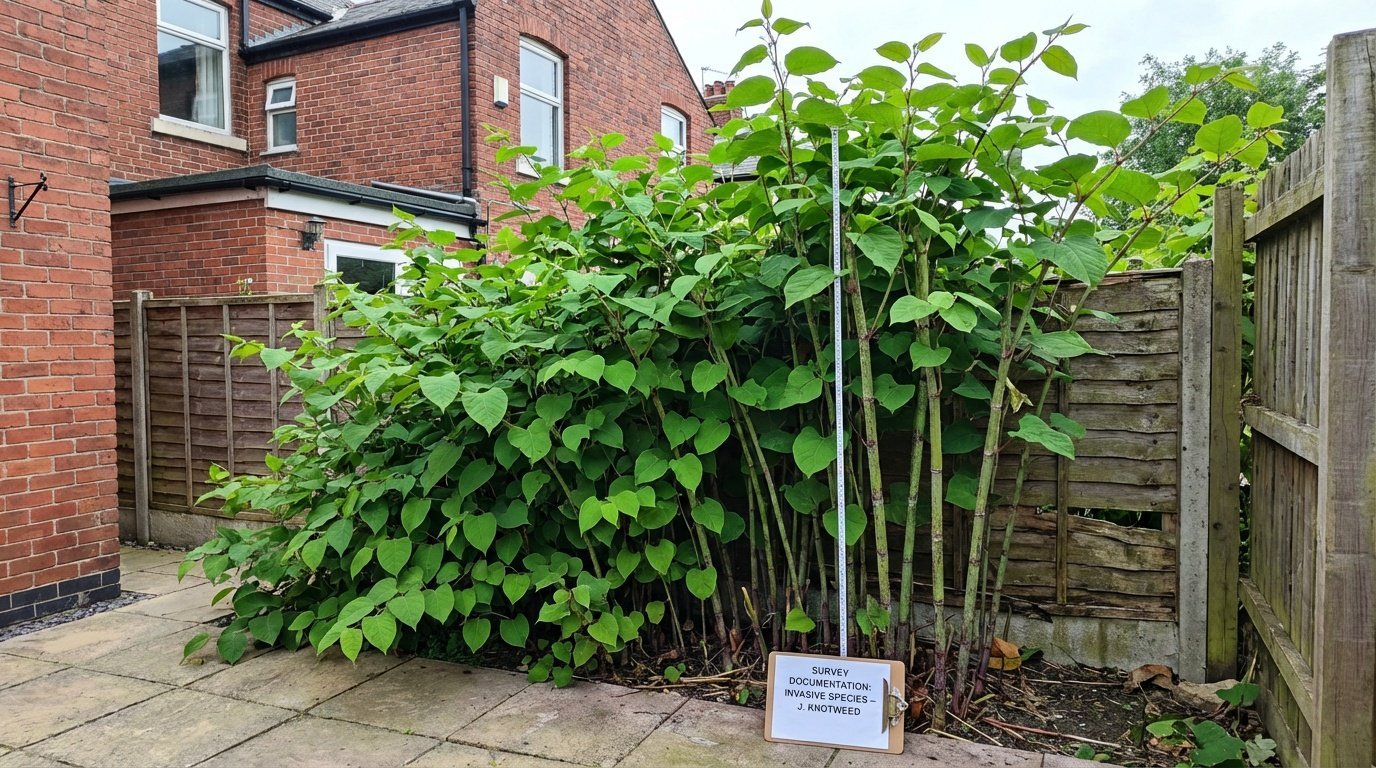
Japanese knotweed is one of the most concerning issues that Ashford Surveyors identify during property surveys, yet it's also one of the most misunderstood. This invasive plant can affect property values, mortgage availability, and cause significant structural damage if left untreated. However, with proper professional management, Japanese knotweed is treatable and needn't derail your property purchase. This comprehensive guide from our experienced chartered surveyors explains everything property buyers in Kent and across the UK need to know about Japanese knotweed identification, treatment, legal obligations, and mortgage implications.
What Is Japanese Knotweed?
Japanese knotweed (Fallopia japonica) is a highly invasive non-native plant introduced to Britain in the 1800s as an ornamental garden plant. It's now recognized as one of the most problematic invasive species in the UK, causing an estimated £166 million annual damage to properties and infrastructure.
Why Is Japanese Knotweed So Problematic?
Several characteristics make Japanese knotweed particularly concerning for property owners:
- Rapid growth: Can grow up to 10cm per day during peak season
- Aggressive spread: Spreads through rhizomes (underground root systems) extending 7 meters horizontally and 3 meters deep
- Structural damage: Penetrates through asphalt, concrete, drains, and building foundations
- Difficult eradication: Tiny fragments of rhizome can regenerate new plants
- Legal implications: Property owners have legal obligations to prevent spread
- Mortgage issues: Many lenders refuse mortgages on properties with untreated knotweed
- Devaluation: Presence can reduce property values by 5-15% or more
During one memorable survey in Maidstone, I discovered Japanese knotweed growing along the rear boundary of a Victorian terrace. The buyers were initially unaware of the significance. Our detailed report explained the implications, treatment requirements, and costs. The buyers negotiated a £15,000 price reduction to cover professional treatment and management, demonstrating why thorough surveys from RICS surveyors are essential.
How to Identify Japanese Knotweed
Japanese knotweed appears differently throughout the year, making identification challenging for non-experts. Chartered surveyors at Ashford Surveyors are trained to identify knotweed at any stage:
Spring Identification (March-May)
- Shoots: Red/purple asparagus-like shoots emerge from ground
- Growth rate: Shoots grow rapidly, several centimeters per day
- Appearance: Fleshy, speckled stems breaking through soil
Summer Identification (June-August)
- Stems: Hollow bamboo-like stems with purple speckles, growing 2-3 meters tall
- Leaves: Shield or shovel-shaped leaves (spade-like), 10-15cm long
- Leaf arrangement: Zig-zag pattern along stems
- Leaf color: Bright green with distinct veins
- Flowers: Small creamy-white flowers appear in late summer (August-September)
- Growth habit: Dense stands forming impenetrable thickets
Autumn Identification (September-November)
- Flowers: Creamy-white flower clusters
- Leaves: Turn yellow then brown
- Die-back: Above-ground growth starts dying back
Winter Identification (December-February)
- Stems: Dead brown/straw-colored hollow canes remain standing
- Crown: Woody crown visible at ground level
- Identification difficulty: Hardest season to identify without expertise
- Underground activity: Rhizomes remain active below ground
Similar Plants Often Confused with Japanese Knotweed
Several plants are commonly mistaken for Japanese knotweed:
- Russian Vine (Mile-a-Minute): Similar rapid growth but climbing habit
- Bindweed: Climbing plant with similar leaves but different stem structure
- Bamboo: Similar hollow stems but different leaf shape and growth habit
- Dogwood: Similar stem coloring but different leaf shape
- Lilac: Young shoots can look similar but leaves differ
If you suspect Japanese knotweed during property viewings, point it out to your surveyor. We'll investigate thoroughly and recommend specialist identification if necessary. Never assume—proper identification by experts is crucial.
How Japanese Knotweed Affects Properties
Structural Damage
Japanese knotweed causes property damage through:
- Foundation damage: Rhizomes penetrate weaknesses in foundations
- Drain damage: Roots infiltrate drainage systems causing blockages and damage
- Hard surfacing damage: Pushes through asphalt, paving, concrete
- Wall penetration: Exploits cracks and mortar joints in walls
- Cavity wall infiltration: Grows through wall cavities
Important clarification: Japanese knotweed doesn't "eat through concrete" as sometimes sensationalized. However, it exploits existing weaknesses and cracks, exerting pressure that widens damage over time. Well-maintained structures with no pre-existing weaknesses are at lower risk of knotweed damage.
Property Devaluation
Japanese knotweed presence affects property values significantly:
- Immediate impact: 5-15% reduction in property value typical
- Mortgage difficulties: Many lenders refuse or restrict lending
- Treatment costs: Professional eradication costs £1,500-£5,000+
- Management plans: Ongoing monitoring required (typically 5-10 years)
- Stigma effect: Even after treatment, history may affect future sales
Legal and Neighbor Issues
Japanese knotweed has legal implications:
- Legal duty: Property owners must prevent knotweed spreading to neighboring properties
- Civil action: Neighbors can sue for damages if knotweed spreads from your property
- Criminal offense: Allowing knotweed to spread to the wild is illegal under Wildlife and Countryside Act 1981
- Controlled waste: Knotweed-contaminated soil is classified as controlled waste requiring licensed disposal
Japanese Knotweed and Mortgage Lenders
Lender Policies Vary Significantly
Different mortgage lenders have varying approaches to Japanese knotweed:
Category 1: Strict Lenders (Refuse All Knotweed Properties)
Some lenders won't provide mortgages on any property where Japanese knotweed is present or has been present, regardless of treatment. This restrictive approach is becoming less common as industry understanding improves.
Category 2: Risk-Assessed Lenders (Consider Distance and Management)
Most major lenders now assess Japanese knotweed risk based on:
- Distance from property: Knotweed within 7 meters of habitable buildings is high-risk
- Treatment status: Active treatment with management plans may be acceptable
- Insurance-backed guarantees: Professional treatment with 10-year guarantees often acceptable
- Boundary location: Knotweed on neighboring land is particularly problematic
Category 3: Case-by-Case Lenders
Some lenders assess each case individually, considering all factors including treatment plans, guarantees, and property-specific circumstances.
The 7-Meter Rule
Many lenders use a "7-meter rule" based on research suggesting Japanese knotweed rhizomes typically extend up to 7 meters from visible growth:
- Within 7 meters of property: High risk—most lenders require treatment with insurance-backed guarantee or refuse mortgage
- 7+ meters from property: Lower risk—lenders may proceed with appropriate management plans
- On neighboring land: Particularly problematic as you can't control treatment
Ashford Surveyors measure and document Japanese knotweed locations precisely, providing lenders with information they need for mortgage decisions.
Japanese Knotweed Treatment Options
Professional Treatment Methods
Effective Japanese knotweed treatment requires professional specialists. DIY approaches typically fail and can worsen problems. Main treatment methods include:
1. Herbicide Treatment
Method: Specialist contractors apply systemic herbicides (typically glyphosate-based) to foliage during growing season. Treatment continues over multiple growing seasons.
Timeline: Typically 2-5 years for eradication, though management continues 5-10 years
Cost: £1,500-£3,000 for typical domestic infestations
Advantages:
- Most cost-effective method
- Minimal disruption
- Can be done while property is occupied
- Suitable for most situations
Disadvantages:
- Takes several years
- Requires repeated applications
- Weather-dependent
- May not satisfy some mortgage lenders immediately
2. Excavation and Removal
Method: Complete excavation of knotweed-contaminated soil to minimum 3 meters depth, removal to licensed facility, and replacement with clean soil.
Timeline: Can be completed within weeks
Cost: £5,000-£20,000+ depending on extent and site access
Advantages:
- Immediate removal
- Fast solution
- More acceptable to mortgage lenders immediately
- Suitable when rapid resolution needed
Disadvantages:
- Very expensive
- Major disruption
- Requires licensed waste disposal
- Risk of spreading if not done correctly
- May not remove all contaminated soil
3. Root Barrier Installation
Method: Installing physical barriers (typically HDPE membranes) to prevent knotweed spreading toward property, combined with herbicide treatment.
Cost: £2,500-£6,000 depending on size
Advantages:
- Protects property immediately
- Prevents spread
- Can satisfy lender concerns
- Combined with herbicide for complete solution
4. Burial On-Site
Method: Excavating contaminated soil and burying it deep on-site within root-proof membrane encapsulation.
Cost: £3,000-£8,000 depending on volume
Advantages:
- Avoids expensive waste disposal
- Faster than herbicide alone
- Suitable for larger sites
Insurance-Backed Guarantees
Reputable Japanese knotweed specialists provide insurance-backed guarantees (typically 10 years) covering:
- Completion of treatment program
- Re-treatment if knotweed returns
- Property damage compensation if treatment fails
- Professional indemnity insurance
These guarantees are often essential for mortgage approval and reassure lenders that treatment is properly managed and insured.
What to Do If Japanese Knotweed Is Found During Your Survey
If Ashford Surveyors identify Japanese knotweed during your building survey, follow these steps:
Step 1: Confirm Identification
If our surveyors suspect Japanese knotweed but identification isn't certain, we recommend specialist confirmation. Expert botanists or Japanese knotweed specialists provide definitive identification reports that lenders and solicitors accept.
Step 2: Commission Management Plan
Contact specialist Japanese knotweed treatment companies for:
- Site survey and infestation mapping
- Treatment recommendations
- Cost quotations
- Management plan proposals
- Insurance-backed guarantee details
Obtain quotes from at least 2-3 reputable specialists for comparison.
Step 3: Understand Mortgage Implications
Contact your mortgage lender immediately with:
- Survey report highlighting Japanese knotweed
- Professional identification if obtained
- Proposed management plan
- Treatment quotations
Lender decisions vary, so early communication prevents delays or surprises.
Step 4: Negotiate with Seller
Use Japanese knotweed findings to negotiate:
- Price reduction: Covering treatment costs plus contingency (typically treatment cost × 1.5-2.0)
- Seller-funded treatment: Request seller commissions and pays for treatment before completion
- Retention: Solicitor holds portion of purchase price pending treatment completion
- Warranty assignment: If seller has existing treatment program, transfer guarantee to you
Be reasonable but firm—Japanese knotweed is a legitimate material defect affecting value and mortgageability.
Step 5: Decide Whether to Proceed
Consider:
- Treatment costs and timeline
- Mortgage lender's position
- Your risk tolerance and budget
- Negotiation success with seller
- Long-term management requirements
Japanese knotweed needn't automatically end purchases, but proceed with eyes open and appropriate financial arrangements.
Preventing Japanese Knotweed Spread
If you purchase property with Japanese knotweed, you have legal obligations to prevent spread:
What NOT to Do
- Don't cut or strim: Fragments spread the plant
- Don't dig or disturb: Rhizome fragments regenerate
- Don't compost: Knotweed survives composting
- Don't dispose in regular waste: It's controlled waste requiring licensed disposal
- Don't attempt DIY removal: Almost always worsens problems
- Don't ignore it: Neglect leads to spread and legal problems
What You Should Do
- Engage professional treatment specialists immediately
- Follow management plans precisely
- Maintain records of treatment and monitoring
- Inform neighbors if knotweed is near boundaries
- Update property records and disclose to future buyers
- Arrange annual monitoring even after apparent eradication
Frequently Asked Questions
Should I walk away if Japanese knotweed is found?
Not necessarily. Japanese knotweed is treatable with professional management. If the seller agrees to fund treatment or reduce the price appropriately, and your mortgage lender will proceed with suitable management plans in place, purchase can continue. However, ensure you understand treatment costs, timescales, and ongoing obligations. Ashford Surveyors help you assess whether proceeding makes sense for your circumstances.
Can I get a mortgage on a property with Japanese knotweed?
It depends on the lender and circumstances. Many lenders now accept properties with Japanese knotweed if: (1) it's more than 7 meters from buildings, (2) professional treatment with insurance-backed guarantees is in place, (3) comprehensive management plans exist. However, some lenders still refuse all knotweed properties. Early lender communication is essential when knotweed is discovered.
How much does Japanese knotweed treatment cost?
Costs vary significantly based on extent and treatment method: herbicide treatment typically costs £1,500-£3,000; excavation and removal costs £5,000-£20,000+; root barriers cost £2,500-£6,000. Add insurance-backed guarantees (usually included) and ongoing monitoring. Always obtain multiple specialist quotations for accurate pricing.
How long does Japanese knotweed treatment take?
Herbicide treatment typically takes 2-5 growing seasons to achieve eradication, with monitoring continuing 5-10 years. Excavation can be completed within weeks but is much more expensive. Most treatment programs involve initial intensive treatment followed by years of monitoring to ensure complete eradication. Patience is essential—rushing treatment increases failure risk.
What if Japanese knotweed is on neighboring land?
This is particularly problematic as you can't control treatment. Inform your neighbor (preferably in writing) about the knotweed and your concerns about spread. They have legal duty to prevent spread. If they refuse to act, you may need legal advice. Some mortgage lenders refuse properties where knotweed is on adjacent land unless barriers are installed on your side. RICS surveyors document situations clearly to support any necessary action.
Do I have to tell buyers if my property had Japanese knotweed?
Yes, absolutely. The TA6 Property Information Form specifically asks about Japanese knotweed. You must disclose current or historic presence, treatment undertaken, and guarantee details. Failure to disclose is misrepresentation that could lead to legal action. Even after successful treatment, be honest—transparency protects you legally and ethically.
Can I treat Japanese knotweed myself?
While technically possible, DIY treatment almost always fails and often worsens problems by spreading fragments. Professional treatment with insurance-backed guarantees is essential for: (1) effective eradication, (2) satisfying mortgage lenders, (3) protecting property value, (4) ensuring legal compliance. The cost of professional treatment is worthwhile investment in proper management.
Why Choose Ashford Surveyors?
When buying property in Kent, you need chartered surveyors who understand Japanese knotweed identification and implications. Ashford Surveyors provide:
- Expert identification: Training and experience recognizing Japanese knotweed at all growth stages
- Detailed documentation: Photographs, location mapping, and distance measurements
- Clear advice: Honest guidance about treatment requirements and costs
- Lender-friendly reports: Information formatted to support mortgage applications
- Specialist connections: Relationships with reputable knotweed treatment specialists
- Post-survey support: Guidance through treatment negotiations and lender discussions
- Local knowledge: Understanding of Japanese knotweed prevalence in Kent areas
We've identified Japanese knotweed in numerous Kent properties and helped buyers navigate treatment, negotiation, and mortgage approval successfully.
Conclusion: Japanese Knotweed Needn't End Your Purchase
Japanese knotweed is serious but manageable. While this invasive plant causes legitimate concerns about property damage, mortgage availability, and legal obligations, professional treatment with insurance-backed guarantees provides effective management.
The key to successful property purchase when Japanese knotweed is present is thorough professional assessment from experienced RICS surveyors, prompt specialist treatment planning, clear lender communication, and fair negotiation with sellers.
Don't let Japanese knotweed panic you into walking away from an otherwise suitable property. With proper management, treatment costs covered through negotiation, and lender approval secured, properties with Japanese knotweed history can be excellent purchases once issues are properly addressed.
If you're buying property in Kent and want thorough building surveys identifying Japanese knotweed and all other defects, contact Ashford Surveyors today. Our comprehensive inspections and clear reporting help you make informed decisions and negotiate effectively.
Commission Your Professional Survey Today
Contact Ashford Surveyors for thorough building surveys including Japanese knotweed identification throughout Kent.
Request Your Survey Quote